
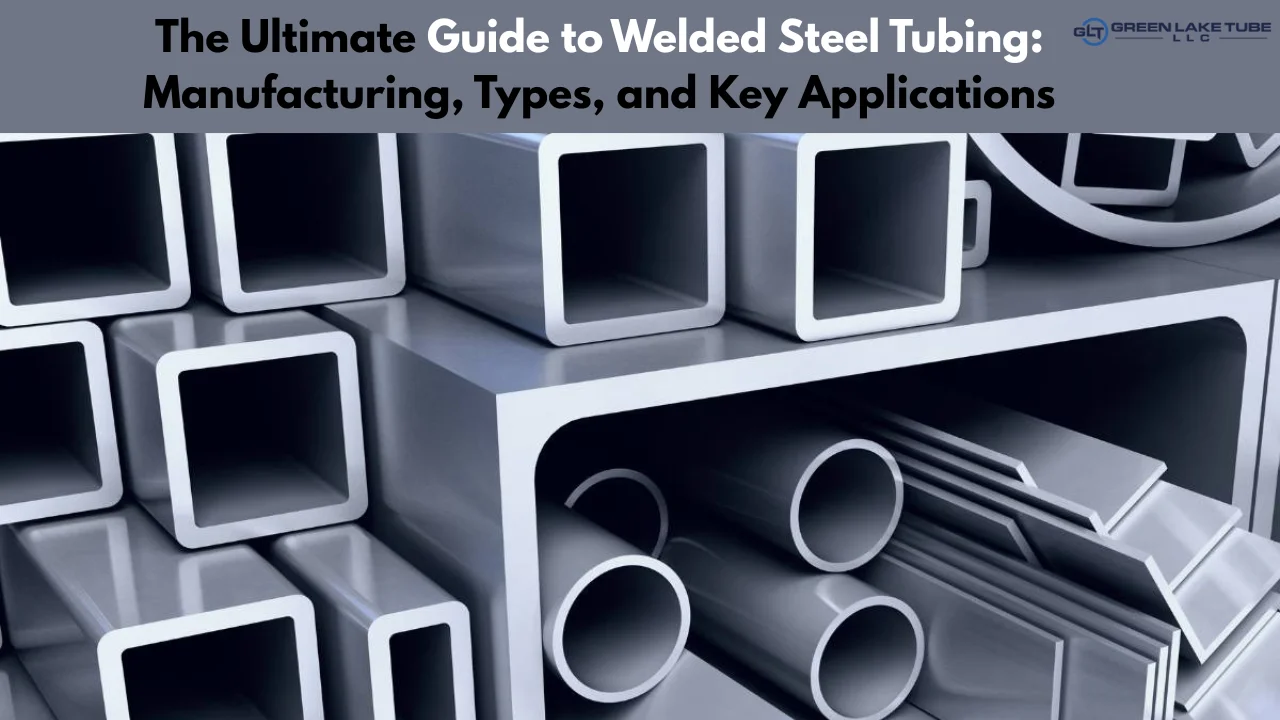
Discover everything about welded steel tubing, including ERW manufacturing, diverse types like round steel tubing, ASTM standards (A500, A513), and critical applications for fabricators and OEMs. In the intricate world of manufacturing and industrial fabrication, the choice of materials dictates the strength, longevity, and efficiency of countless products and structures. Among the most versatile and widely utilized components is welded steel tubing.
The Backbone of Modern Fabrication – Welded Steel Tubing
From the chassis of a heavy-duty trailer to the intricate framework of industrial machinery, welded tube plays a foundational role. But what exactly is welded steel tubing, and why has it become an indispensable choice for fabricators, OEMs, engineers, and purchasing managers across the United States? This comprehensive guide will demystify welded steel tubing, delving deep into its manufacturing processes, diverse types (including the omnipresent ERW metal tube and round steel tubing), and its myriad applications.
We’ll explore the technical nuances that make welded steel a superior choice in many scenarios, helping you navigate specifications like .75 tubing 16 gauge, 1.5 tube steel, and 1 steel tubing round with confidence. Our aim is to provide a truly authoritative resource that not only answers your pressing questions but also equips you with the knowledge to make informed decisions for your next project, establishing our site as your trusted industry partner.
Understanding the Genesis: How Welded Steel Tubing is Made
The strength and consistency of welded steel tubing stem directly from its sophisticated manufacturing process. Unlike seamless tubing, which is extruded from a solid billet, welded tubing is formed from flat steel coils, then meticulously joined along a seam. The most prevalent and advanced method for producing high-quality welded steel tubing today is Electric Resistance Welding (ERW).
The ERW Tubing Manufacturing Process: Precision in Motion
The ERW pipe and ERW metal tube manufacturing process is a marvel of modern engineering, ensuring high strength and dimensional accuracy. Here’s a breakdown:
- Coil Preparation: High-quality steel coils, often hot-rolled or cold-rolled depending on the desired finish and mechanical properties, are uncoiled and fed into the production line.
- Forming: The flat steel strip, known as skelp, passes through a series of rollers. These rollers progressively shape the strip into a cylindrical form, bringing the two edges together. This precision forming is critical for ensuring a tight, consistent seam.
- Electric Resistance Welding: As the formed tube approaches the welding station, high-frequency electric current is passed through the edges of the steel strip. The inherent electrical resistance of the steel rapidly heats the edges to a temperature where they become plastic (but not molten). Pressure rollers then forge these heated edges together, creating a strong, clean weld without the need for filler material. This solid-state welding process ensures a uniform bond.
- Scarfing (Optional but Common): Immediately after welding, an external and often internal scarfing tool removes any excess weld flash. This results in a smooth, consistent surface both inside and out, critical for applications requiring close tolerances or aesthetic appeal.
- Sizing and Straightening: The welded tube then passes through additional sizing rollers to achieve precise outer diameter (OD) and wall thickness. It’s also straightened to meet stringent industry standards for straightness.
- Cutting and Finishing: Finally, the continuous welded steel tube is cut to specified lengths. Further processes like annealing, drawing over a mandrel (DOM for enhanced precision), or coating can be applied to meet specific mechanical properties or surface finish requirements.
The advantages of the ERW process are significant: it’s cost-effective, allows for continuous production of long lengths, and yields a product with excellent dimensional control and consistent mechanical properties, making it ideal for the production of mechanical tubing and a wide range of round steel tubing products.
Decoding Welded Steel Tubing Types and Their Technical Specifications
The world of welded steel tubing is diverse, catering to an array of industrial demands. Understanding the different types and their associated standards is crucial for selecting the right material for your application.
Structural Tubing vs. Mechanical Tubing: Knowing the Difference
While often visually similar, structural tubing and mechanical tubing serve distinct purposes and are manufactured to different specifications.
- Structural Tubing (e.g., ASTM A500): This category, often including welded steel pipe (though pipe and tube have key distinctions), is primarily designed for load-bearing applications where structural integrity and strength are paramount. It’s commonly used in building frameworks, bridges, highway structures, and general construction. ASTM A500 is a common standard for cold-formed welded and seamless carbon steel structural tubing in round, square, and rectangular shapes. Key properties emphasized for A500 include yield strength and tensile strength.
- Mechanical Tubing (e.g., ASTM A513): Mechanical tubing is produced with tighter dimensional tolerances, superior surface finish, and specific mechanical properties tailored for components that will be machined, bent, or otherwise fabricated into precise parts. It’s prevalent in automotive components, furniture, machinery parts, and agricultural equipment. ASTM A513 covers electric-resistance-welded carbon and alloy steel mechanical tubing, with sub-types like Type 1 (hot-rolled ERW), Type 2 (cold-rolled ERW), and Type 5 (Drawn Over Mandrel – DOM for highest precision).
Common Welded Steel Tube Forms: Round, Square, and Rectangular
While our focus here is on round steel tubing, it’s important to acknowledge its counterparts:
- Round Steel Tubing: The most common form, round tube offers excellent strength-to-weight ratio and uniform stress distribution. It’s highly versatile and available in a vast array of diameters and wall thicknesses (gauges). You’ll find popular dimensions like .75 tubing 16 gauge, 1.5 tube steel, and 1 steel tubing round serving applications from automotive exhaust systems to handrails and furniture.
- Square and Rectangular Tubing: These forms are favored for structural applications where flat surfaces are required for attachment or for aesthetic purposes. They are often produced to ASTM A500 standards.
Understanding Key Specifications: OD, Wall Thickness, and Gauge
When specifying tube metal for your project, precise dimensions are critical:
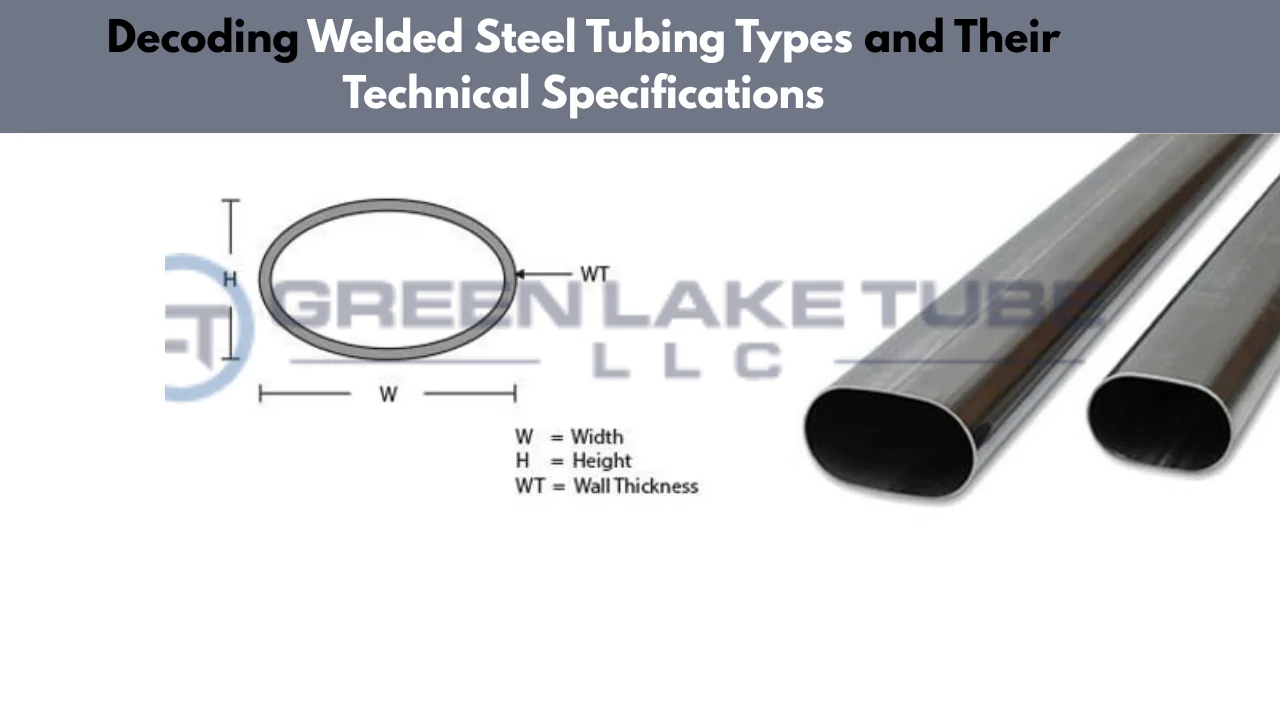
- Outside Diameter (OD): The measurement across the exterior of the tube. This is a primary defining characteristic for tube size.
- Wall Thickness: The thickness of the material forming the tube wall. This directly impacts the tube’s strength and weight.
- Gauge: A common system for denoting wall thickness, especially in thinner materials. A lower gauge number indicates a thicker wall (e.g., 16 gauge is thicker than 18 gauge). For example, .75 tubing 16 gauge refers to a tube with a 0.75-inch outside diameter and a 16-gauge wall thickness.
Key Applications: Where Welded Steel Tubing Shines
The versatility and cost-effectiveness of weldable steel tubing make it a preferred choice across numerous industries. Its ability to be easily cut, bent, and welded into complex geometries broadens its utility significantly.
Automotive & Transportation
Welded steel tubing is integral to the automotive sector. From exhaust systems and frame components to seat frames and roll cages, the strength and formability of round metal tubing are critical. The demand for lightweight yet strong materials in vehicle manufacturing continually drives innovation in steel round tubing and its processing. Trailer and container manufacturers rely heavily on welded steel for structural members, axles, and support frames due to its durability and cost efficiency.
Construction & Infrastructure
In construction, welded steel pipe and tubing are used for scaffolding, handrails, architectural elements, and light structural frameworks. Its ease of fabrication on-site and robust performance make it a go-to material. Large-scale infrastructure projects also utilize welded tubing for support structures, signage, and various non-pressure fluid transfer systems.
Machinery & Industrial Equipment
Precision mechanical tubing is a staple in the manufacturing of machinery. Conveyor systems, hydraulic cylinders, agricultural equipment, and various automated systems depend on the tight tolerances and consistent properties of ERW metal tube. The ability to weld steel round tube into custom shapes ensures optimal performance and fit within complex machinery designs.
Furniture & Consumer Goods
Beyond heavy industry, rounded tube finds its way into everyday items. Office furniture, outdoor patio sets, and even some consumer electronics utilize smaller diameter steel round tubing for its aesthetic appeal, strength, and ease of mass production. The smooth finish often achievable with ERW and cold-rolled processes is a significant advantage here.
Recreational & Sporting Equipment
From bicycle frames to gym equipment, round tubing is a common choice. Its inherent strength-to-weight ratio allows for designs that are both robust and agile. Enthusiasts and manufacturers alike appreciate the reliable weldable steel tubing characteristics that ensure safety and performance.
Optimizing Performance: Tips for Working with Welded Steel Tubing
To maximize the benefits of welded steel tubing in your operations, consider these expert tips and best practices:
- Material Selection is Paramount: Always match the steel tube stock to the application. For high-precision components, opt for A513 Type 5 (DOM) tubing. For general structural uses, A500 Grade B or C may suffice. Understand the chemical composition (e.g., carbon content) as it impacts weldability.
- Precision Cutting: Accurate cutting is the foundation of good fabrication. Utilize modern cutting methods like laser cutting or saw cutting for clean, square edges, minimizing rework and ensuring proper fit-up for welding tube steel.
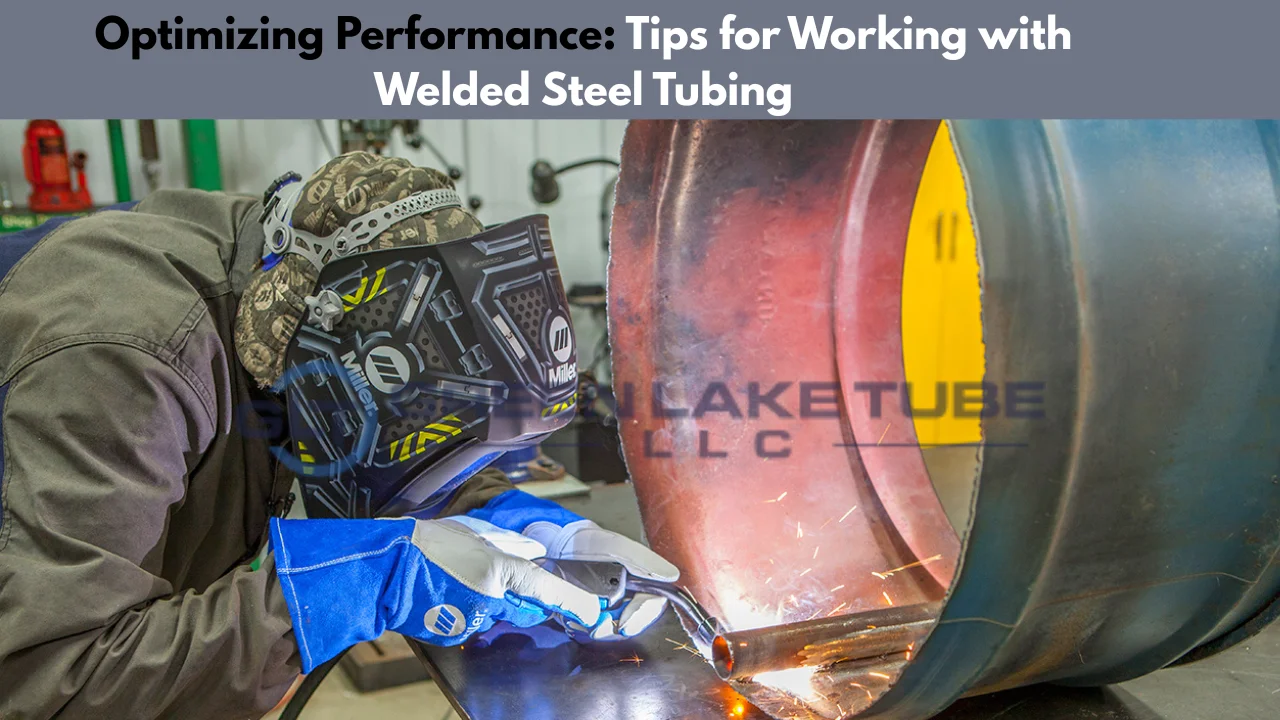
- Welding Best Practices: While welded steel tubing is inherently weldable, proper technique is essential.
- Cleanliness: Ensure surfaces are free from rust, oil, or scale before welding.
- Joint Preparation: Prepare joints meticulously (beveling, root gap) according to welding procedure specifications (WPS) to ensure full penetration and strong welds.
- Filler Metal Selection: Choose filler metals compatible with the base material to achieve optimal weld strength and ductility.
- Heat Input Control: Manage heat input to prevent distortion and maintain mechanical properties, especially for thinner-walled tubing like .75 tubing 16 gauge.
- Consider Post-Weld Treatment: Depending on the application, post-weld heat treatment (PWHT) or stress relieving might be necessary to enhance the mechanical properties and relieve residual stresses in the welded steel component.
- Surface Finish and Corrosion Protection: For outdoor or corrosive environments, consider galvanized, coated, or painted round tube steel to extend its lifespan and maintain aesthetic integrity.
Frequently Asked Questions (FAQs) About Welded Steel Tubing
Q1: What is the primary difference between welded steel pipe and welded steel tubing?
A1: While often used interchangeably, the key distinction lies in their primary application and measurement. Welded steel pipe is typically designed for fluid and gas transfer, with its dimensions defined by nominal pipe size (NPS) and schedule (wall thickness relative to diameter) which roughly corresponds to the internal diameter. Welded steel tubing, conversely, is primarily used for structural, mechanical, or ornamental applications and is precisely specified by its actual outside diameter (OD) and wall thickness or gauge. Tubing also generally has tighter dimensional tolerances and a smoother surface finish.
Q2: Is ERW tubing as strong as seamless tubing?
A2: For many applications, yes. Modern high-frequency ERW metal tube processes produce a weld seam that is as strong, or in some cases, stronger than the parent material. The weld is often undetectable both visually and structurally. Seamless tubing may be preferred for very high-pressure applications or those where complete homogeneity is critical, but for the vast majority of structural and mechanical tubing uses, ERW tubing offers comparable performance at a more economical price point.
Q3: What does “16 gauge” mean when referring to .75 tubing 16 gauge?
A3: Gauge is a common measurement system for the thickness of sheet metal and tubing walls. A higher gauge number indicates a thinner material, while a lower gauge number signifies a thicker material. So, 16 gauge (.065 inches or approximately 1.65 mm) is thicker than, say, 18 gauge. For .75 tubing 16 gauge, it means the tube has a 0.75-inch outside diameter and a wall thickness of 16 gauge.
Q4: Can welded steel tubing be used for outdoor applications?
A4: Yes, welded steel tubing can certainly be used for outdoor applications. However, plain carbon steel will rust when exposed to the elements. For enhanced durability and corrosion resistance in outdoor environments, it’s highly recommended to utilize galvanized steel round tubing, apply protective coatings (like paint or powder coating), or opt for stainless steel welded tubing.
Q5: What are common challenges when welding tube steel and how can they be mitigated?
A5: Common challenges include distortion due to heat input, lack of penetration, porosity, and cracking. Mitigation strategies involve:
- Proper Joint Preparation: Ensuring clean, properly beveled edges.
- Controlling Heat Input: Using appropriate welding parameters (current, voltage, travel speed) and possibly preheating or interpass temperature control for thicker sections.
- Selecting Correct Filler Metal: Matching the filler metal to the base material’s chemistry and mechanical requirements.
- Adequate Shielding Gas: Preventing atmospheric contamination for clean welds.
- Proper Fixturing: Clamping or tacking the workpieces securely to minimize distortion.
Conclusion: Your Partner in Precision Welded Steel Tubing
The industrial landscape demands materials that offer a perfect blend of strength, precision, and cost-effectiveness. Welded steel tubing, particularly advanced ERW metal tube products, unequivocally meets these demands. From the foundational round tube to specialized mechanical tubing dimensions like 1.5 tube steel and 1 steel tubing round, its versatility drives innovation and efficiency across countless sectors.
As fabricators, OEMs, and engineers, understanding the intricacies of welded steel manufacturing, its various types, and optimal application strategies is not just beneficial—it’s essential for gaining a competitive edge. By prioritizing high-quality steel tube stock and adhering to best practices in fabrication, you ensure the longevity and performance of your projects.
We are committed to providing superior weldable steel tubing solutions that align with your exacting standards. Explore our extensive inventory of steel round tube, leverage our technical expertise, and let us help you select the ideal materials for your next groundbreaking endeavor.

