
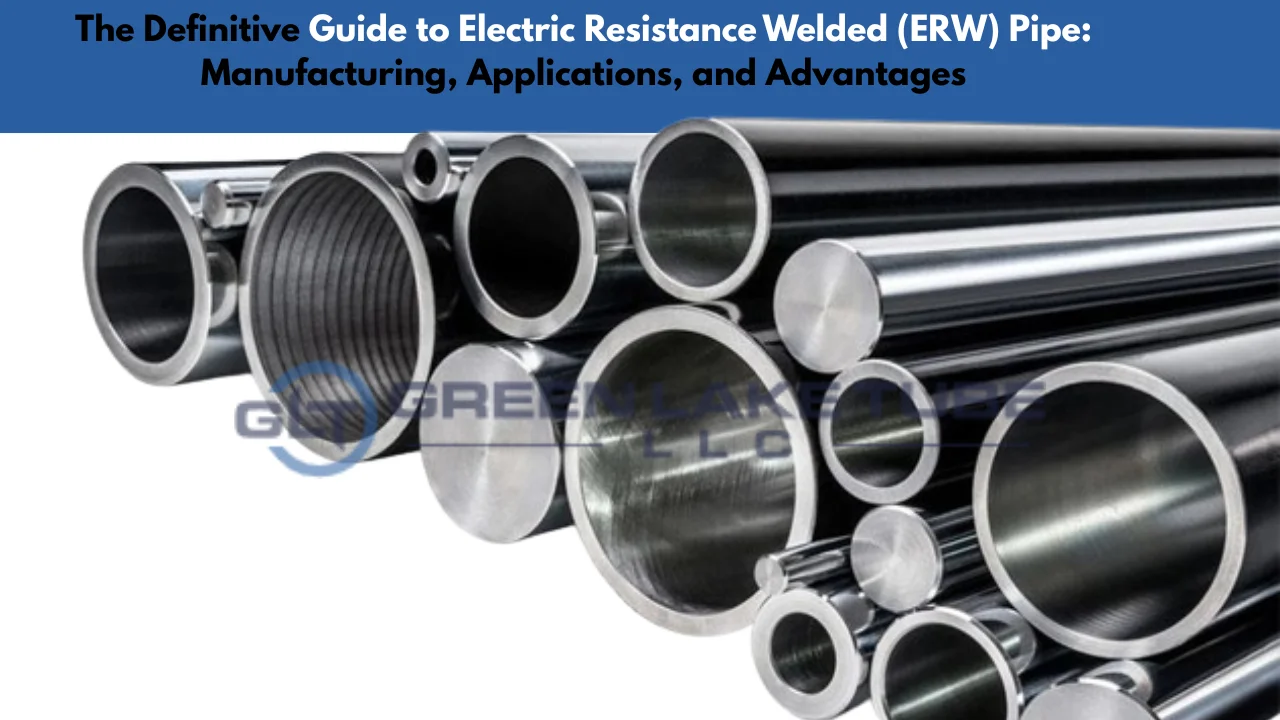
Explore electric resistance welded (ERW) pipe manufacturing, advantages, and diverse applications in our definitive guide. Understand ERW pipe’s strength, cost-effectiveness, and how it’s revolutionizing industries from oil & gas to construction.
The Unseen Backbone of Modern Industry – Understanding Electric Resistance Welded Pipe
In the intricate world of industrial manufacturing and infrastructure, the integrity of the materials used is paramount. When it comes to steel tubing, engineers, procurement specialists, and project managers constantly seek solutions that offer an optimal balance of strength, cost-efficiency, and consistent performance. Among the myriad options available, Electric Resistance Welded (ERW) pipe stands out as a true workhorse, forming the unseen backbone of countless critical applications across diverse sectors.
But what exactly is ERW pipe, and why has it become so indispensable? Far from a simple metal tube, electric resistance welded products represent a sophisticated engineering solution, meticulously crafted through a process that has continually evolved for over a century. This article will serve as your definitive guide, peeling back the layers to reveal the technical intricacies of ERW pipe manufacturing, its myriad applications, and the distinct advantages it offers over other pipe and electric metal tube alternatives. We’ll delve into the specifics of how ERW pipes are made, the rigorous quality controls that ensure their reliability, and why they are often the preferred choice for demanding environments. By the end of this comprehensive exploration, you’ll have a profound understanding of electric resistance welded steel pipe and its pivotal role in the modern industrial landscape, empowering you to make informed decisions for your next project.
Unpacking the ERW Manufacturing Process: From Coil to Precision Pipe
The journey of an ERW pipe begins as a flat coil of steel strip, known as skelp. What transforms this humble material into a robust, high-performance pipe is a continuous and highly automated process rooted in the principle of electric resistance. Unlike other welding methods that rely on external filler material, ERW creates a weld by using the resistance of the metal itself to an electric current.
The Core Mechanics: High-Frequency Welding (HFW)
While various iterations of electric resistance welded processes exist, modern ERW pipe production predominantly utilizes High-Frequency Welding (HFW). This advanced technique delivers a high-amperage, high-frequency current to the edges of the formed steel strip. Here’s a breakdown of the key stages:
- Uncoiling and Preparation: The steel coil is first uncoiled and fed into the production line. Edges are often trimmed and cleaned to ensure optimal weld quality.
- Forming: The flat strip is progressively shaped through a series of rollers, gradually forming it into a cylindrical (or ERW rectangular tube) open-seam tube. This cold-forming process is critical for achieving precise dimensional tolerances.
- High-Frequency Welding: As the edges of the formed tube meet, a high-frequency alternating current is applied. This current rapidly heats the opposing edges to forging temperature, just below their melting point. Simultaneously, pressure rollers, known as squeeze rollers, force these heated edges together. The combination of heat and pressure creates a strong, forge weld without the addition of filler metal. The intense heat causes impurities and oxides to be squeezed out, forming a small “flash” on both the inside and outside of the weld seam.
- Flash Trimming: Immediately after welding, internal and external scarfing (trimming) tools remove the excess flash, resulting in a smooth, consistent weld seam. This step is critical for ensuring internal flow characteristics and external aesthetics, especially for electric tube applications where a smooth surface is vital.
- Sizing and Straightening: The welded tube then passes through another series of sizing rolls to achieve the precise final outside diameter and wall thickness. This stage is crucial for dimensional accuracy. Simultaneously, the pipe is straightened to meet stringent linearity requirements.
- Cutting: Finally, the continuous ERW steel pipe is cut to specified lengths using flying cut-off saws, ensuring uninterrupted production.
Post-Weld Heat Treatment (PWHT) and Quality Control
For many applications, especially those requiring enhanced ductility and toughness, the weld seam undergoes Post-Weld Heat Treatment (PWHT). This process, often involving induction heating, normalizes the grain structure in the weld area, effectively eliminating residual stresses and improving the overall mechanical properties of the ERW pipe.
Quality control throughout the ERW welded pipe manufacturing process is rigorous and multi-faceted. This includes:
- Non-Destructive Testing (NDT): Techniques like ultrasonic testing (UT) and eddy current testing are continuously employed to scan the entire weld seam for internal defects, ensuring weld integrity.
- Hydrostatic Testing: Pipes are pressurized with water to specified levels to verify their leak tightness and structural integrity under pressure.
- Mechanical Testing: Samples are regularly taken for tensile, yield, flattening, and bend tests to confirm that the material meets the required mechanical properties.
- Dimensional Checks: Continuous monitoring of outside diameter, wall thickness, and straightness ensures adherence to strict tolerances.
This meticulous manufacturing process, coupled with stringent quality control, ensures that ERW tubing consistently meets the demanding specifications of various industries.
Advantages and Applications: Why ERW Pipe is the Industry’s Preferred Choice
The widespread adoption of ERW pipe across a spectrum of industrial applications is no accident. Its unique manufacturing process imbues it with a distinct set of advantages that often make it the most economical and high-performing choice.

Key Advantages of ERW Pipe
- Exceptional Dimensional Accuracy and Surface Finish: The cold forming and precise welding process result in ERW pipes with excellent concentricity, consistent wall thickness, and a smooth external and internal surface. This is particularly beneficial for applications requiring precise fits or efficient fluid flow, such as in electric tubing for conduits or hydraulic lines.
- Cost-Effectiveness: Compared to seamless pipe, ERW manufacturing is generally more efficient and less energy-intensive, leading to lower production costs. This makes ERW pipes a highly attractive option for projects where budget optimization is crucial without compromising quality.
- High Strength-to-Weight Ratio: Modern ERW processes, combined with advancements in steel metallurgy, allow for the production of pipes with excellent strength properties, making them suitable for structural applications where weight is a consideration.
- Uniform Wall Thickness: Unlike seamless pipes, which can have varying wall thicknesses due to the piercing process, ERW pipe maintains a consistent wall thickness throughout its length, leading to predictable performance and easier fabrication.
- Weld Integrity and Homogeneity: With modern HFW techniques and subsequent heat treatment, the weld seam in ERW pipe is highly homogeneous with the base material, often exhibiting comparable mechanical properties. The controlled manufacturing environment minimizes the risk of inclusions or porosity.
Diverse Industrial Applications
The versatility and reliability of electric resistance welded pipe make it suitable for a vast array of critical applications:
- Oil and Gas Transmission: While seamless pipe is often used for extremely high-pressure, sour gas applications, ERW steel pipe is extensively used for medium-pressure oil and gas pipelines, gathering lines, and distribution networks. Its cost-effectiveness makes it ideal for long stretches of pipeline.
- Construction and Structural Applications: ERW rectangular tube and round ERW tubing are fundamental components in structural frameworks, support columns, bridge construction, and architectural elements. Their consistent dimensions and excellent weldability are highly valued here. ASTM A500 is a common specification for these structural ERW pipes.
- Automotive Industry: From exhaust systems to structural components and chassis elements, lightweight yet strong electric metal tube is crucial for vehicle manufacturing, contributing to both performance and fuel efficiency.
- General Mechanical and Industrial Uses: ERW pipes are widely used for conveying water, steam, and various industrial fluids. They are found in heat exchangers, boiler tubes, conveyor systems, and agricultural equipment.
- Fencing and Scaffolding: Due to its cost-effectiveness and structural integrity, ERW tubing is a go-to material for fencing posts, scaffolding structures, and temporary supports.
- Water Well Casing: ERW pipes are commonly employed as casing for water wells due to their durability and ability to withstand underground pressures.
ERW Pipe vs. Seamless Pipe: A Comprehensive Technical Comparison for Industrial Applications
The choice between ERW pipe and seamless pipe is a common dilemma for engineers and project managers. While both are critical components in industrial applications, understanding their fundamental differences, strengths, and limitations is crucial for optimal material selection.
Manufacturing Process Disparities
- Seamless Pipe: Produced by piercing a solid steel billet, seamless pipe has no longitudinal weld seam. The process involves heating the billet and then pushing or pulling it over a piercing mandrel, followed by rolling and sizing to achieve the final dimensions. This method inherently lends itself to thick-walled pipes capable of handling extremely high internal pressures.
- ERW Pipe: As discussed, electric resistance welded pipe is formed from a flat strip and joined by a longitudinal weld seam. This continuous process allows for higher production speeds and excellent control over wall thickness consistency.
Comparative Analysis of Mechanical Properties and Performance
| Feature | ERW Pipe | Seamless Pipe |
| Weld Seam | Has a longitudinal weld seam (modern HFW is very strong) | No weld seam |
| Dimensional Acc. | Excellent concentricity, consistent wall thickness | Can have variations in wall thickness and concentricity |
| Pressure Rating | Suitable for medium to high-pressure applications | Preferred for very high-pressure and critical applications |
| Cost | Generally more cost-effective | Higher production cost |
| Availability | Wide range of sizes and wall thicknesses | More limited in very large diameters or thin walls |
| Ductility | Good; enhanced by post-weld heat treatment | Excellent due to continuous grain structure |
| Applications | Pipelines, structural, automotive, general mechanical | Oil & gas (high pressure), boiler tubes, hydraulics |
Export to Sheets
When to Choose Which
- Choose ERW Pipe when:
- Cost-effectiveness is a significant factor.
- Consistent dimensional accuracy and a smooth surface finish are paramount.
- The application involves medium to high pressures, but not extreme, highly corrosive, or sour gas environments (unless specified grades are used).
- Large volumes and faster lead times are required.
- Aesthetics and fabrication ease (due to uniform properties) are important, such as in ERW rectangular tube structural applications.
- Choose Seamless Pipe when:
- The application involves extremely high pressures, high temperatures, or highly corrosive/sour gas service where any potential weld defect could be catastrophic.
- Absolute material homogeneity is critical, with no weld seam.
- Thick walls for specific pressure containment are a primary requirement.
- The highest levels of reliability and safety are non-negotiable, often mandated by strict industry regulations (e.g., certain API 5L grades for specific oil & gas uses).
Both pipe types are indispensable, and the decision ultimately rests on a thorough engineering analysis of the specific project requirements, environmental conditions, and budget constraints.
Essential ERW Steel Pipe Specifications and Standards: Navigating Compliance
For anyone involved in the procurement, design, or engineering of projects utilizing ERW pipe, a thorough understanding of relevant industry specifications and standards is non-negotiable. These standards ensure quality, safety, and interoperability across the globe. In the United States, several key organizations and their specifications dominate the ERW steel pipe landscape.

Key Standards Bodies and Their Role
- ASTM International (American Society for Testing and Materials): ASTM develops and publishes voluntary consensus standards for a wide range of materials, products, systems, and services. For ERW pipe, ASTM standards primarily cover mechanical tubing, structural tubing, and general purpose pipe.
- API (American Petroleum Institute): API is a primary trade association for the oil and natural gas industry. API specifications, particularly API 5L, are crucial for line pipe used in the transportation of oil and gas.
- ISO (International Organization for Standardization): ISO standards are internationally recognized and often harmonized with national standards. ISO 3183 is the international equivalent to API 5L for line pipe.
Decoding Common ERW Pipe Specifications
Here are some of the most frequently encountered specifications for electric resistance welded pipe in the US:
- ASTM A53: This is one of the most common specifications for steel pipe suitable for pressure and mechanical applications. It covers black and hot-dipped, zinc-coated, welded and seamless steel pipe. ERW pipe is covered under Type E (electric-resistance welded). A53 pipes are used for conveying steam, water, gas, and air.
- Example: ASTM A53 Grade B ERW is widely used for general plumbing and low-pressure pipelines.
- ASTM A135: This standard covers electric-resistance-welded steel pipe intended for conveying liquid, vapor, or gas. It is often used for higher-pressure applications than A53 in specific scenarios.
- ASTM A252: This specification covers welded and seamless steel pipe piles, which are primarily used for structural support as piling. ERW pipe is commonly used for this application due to its consistent dimensions and cost-effectiveness.
- ASTM A500: This standard specifically covers cold-formed welded and seamless carbon steel structural tubing in round, square, and rectangular shapes. ERW rectangular tube and round ERW tubing conforming to A500 are ubiquitous in building construction, bridges, and general structural frameworks. This standard focuses on mechanical properties for structural integrity, such as yield strength and tensile strength.
- Example: ASTM A500 Grade B or C ERW rectangular tube is a staple in architectural exposed steelwork and industrial framing.
- API 5L: This critical specification covers seamless and welded steel line pipe for pipeline transportation systems in the petroleum and natural gas industries. It details various grades (e.g., B, X42, X52, X60, etc.) which denote minimum yield strength. ERW pipe conforming to API 5L is widely used for onshore gathering and transmission lines.
- Example: API 5L Grade B ERW is a common choice for gas distribution lines.
Importance of Compliance and Traceability
Adhering to these specifications is not merely a bureaucratic exercise; it is fundamental to ensuring safety, performance, and long-term reliability. When procuring ERW pipe, always verify:
- Mill Certificates (MTRs): Request Material Test Reports (MTRs) which provide detailed information on the chemical composition, mechanical properties, and testing performed on the specific batch of pipe. These are your assurance of compliance.
- Traceability: Ensure that the pipe can be traced back to its original heat number and manufacturing run. This is crucial for quality assurance and in case of any issues requiring investigation.
- Reputable Suppliers: Partnering with suppliers who have a proven track record of providing compliant, high-quality ERW pipe is paramount.
Understanding and correctly specifying these standards is vital for engineers and buyers to ensure that the chosen ERW pipes meet the exact requirements of their intended application, guaranteeing both performance and safety.
Frequently Asked Questions About Electric Resistance Welded (ERW) Pipe
To further enhance your understanding and address common inquiries, here are some frequently asked questions about ERW pipe.
- Is ERW pipe as strong as seamless pipe?
Modern ERW pipe, especially that manufactured using High-Frequency Welding (HFW) and subjected to proper post-weld heat treatment, can achieve mechanical properties very close to seamless pipe for many applications. For internal pressure containment, the weld seam is often designed to be stronger than the parent material. However, for extremely high-pressure, high-temperature, or highly corrosive applications, seamless pipe is generally still preferred due to its inherent lack of a weld seam.
- What is the difference between ERW pipe and HFI pipe?
HFI (High-Frequency Induction) welding is a specific type of ERW (Electric Resistance Welded) process. In HFI, the high-frequency current is induced into the edges of the steel strip through an induction coil, rather than through direct contact electrodes. HFI is considered the most advanced and widely used method for manufacturing high-quality ERW pipes, especially for critical applications, due to its precise heat control and consistent weld quality. So, while all HFI pipe is ERW, not all ERW pipe necessarily uses HFI (some older methods might use contact welding).
- Can ERW pipe be bent or formed?
Yes, ERW tubing and pipe can be readily bent, formed, and fabricated using standard industry practices. The uniform wall thickness and consistent material properties of ERW pipe often make it easier to achieve predictable bending and forming results compared to some other pipe types. Post-weld heat treatment can further enhance its ductility, making it more amenable to severe forming operations.
- What are common applications for ERW rectangular tube?
ERW rectangular tube is a staple in the construction and structural industries. It’s widely used for columns, beams, trusses, and general framing in buildings and bridges. Its clean lines and aesthetic appeal also make it popular in architectural designs, such as exposed steel structures. Beyond construction, it’s found in machinery frames, conveyor systems, and various support structures due to its excellent strength-to-weight ratio and ease of fabrication.
- How is the quality of ERW pipe ensured?
Quality assurance for ERW pipe involves a multi-stage process. This includes continuous non-destructive testing (NDT) of the weld seam (e.g., ultrasonic testing, eddy current testing) during production, hydrostatic testing of each pipe to check for leaks under pressure, and regular mechanical testing (tensile, yield, flattening, bend tests) on samples to confirm material properties meet specifications. Visual inspection and dimensional checks are also routinely performed.
Conclusion: ERW Pipe – The Foundation of Future Innovation
The Electric Resistance Welded (ERW) pipe is far more than a commodity; it’s a testament to continuous innovation in steel manufacturing, offering a compelling blend of performance, versatility, and economic efficiency. From the rigorous process of high-frequency welding to the meticulous quality control measures, every step ensures that ERW pipes deliver reliable service in the most demanding industrial environments.
As we’ve explored, its advantages in dimensional accuracy, cost-effectiveness, and consistent quality make it an indispensable choice for a broad spectrum of applications – from critical oil and gas pipelines to the foundational structures of our modern cities and the intricate components of the automotive industry. Understanding the nuances of ERW steel pipe specifications, its comparison with seamless alternatives, and the continuous advancements in its production equips engineers and procurement professionals to make truly optimized material selections.
In a world that increasingly demands efficiency without compromise, ERW pipe stands as a robust and reliable solution, continuing to evolve and meet the challenges of tomorrow’s industrial landscape.

